
Aquaponics
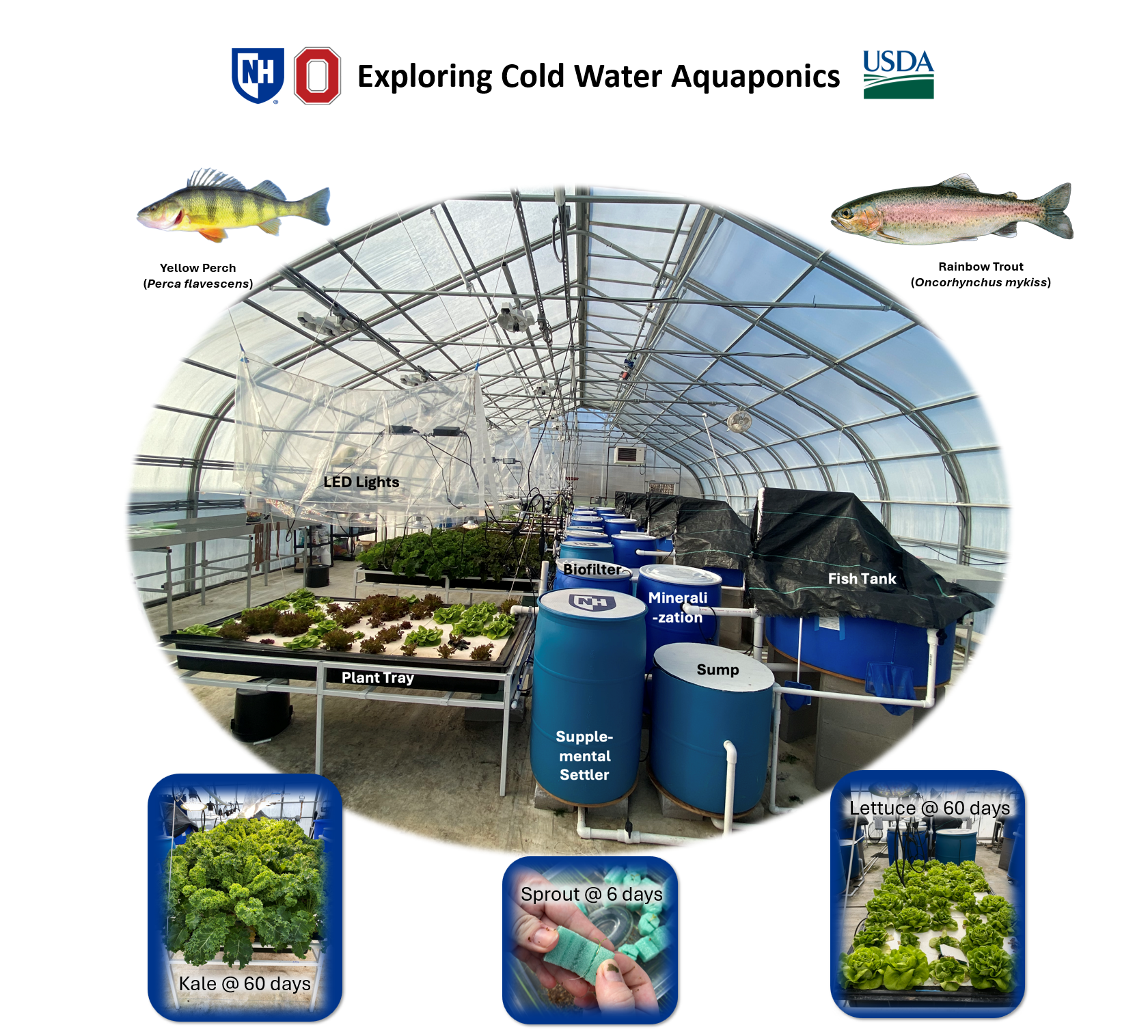
What is AQUAPONICS?
A closed-loop method of food production that combines aquaculture (raising fish) and hydroponics (growing plants in water). Instead of adding chemical fertilizers, fish waste supplies nutrients to the plants, and the plants help clean the water that returns to the fish tank.
Most AP systems have separate tanks with tilapia (a tropical fish species) and lettuce (prefers cool temperatures). Jointly with Ohio State, our system is exploring Rainbow Trout and Yellow Perch (both like cool/cold water) alongside the plants Kale and Lettuce. We monitor growth, nutrients, temperature, pH and nutrients as the plants and fishes grow.
This work is funded by USDA NIFA through the Ohio State University under Agreement No. 2023-70017-41375 to HW & BB. M. Wojno and A. Butt assisted with design and construction of the facility. K. Kwasek provided RAS and feeding advice.
Microbiome Analysis in Aquaponics
We characterize microbiome communities in each compartment of aquaponics system using NGS based metagenomic technology and investigate microbial composition and relationship among them to identify major player that stabilize the aquaponics system.
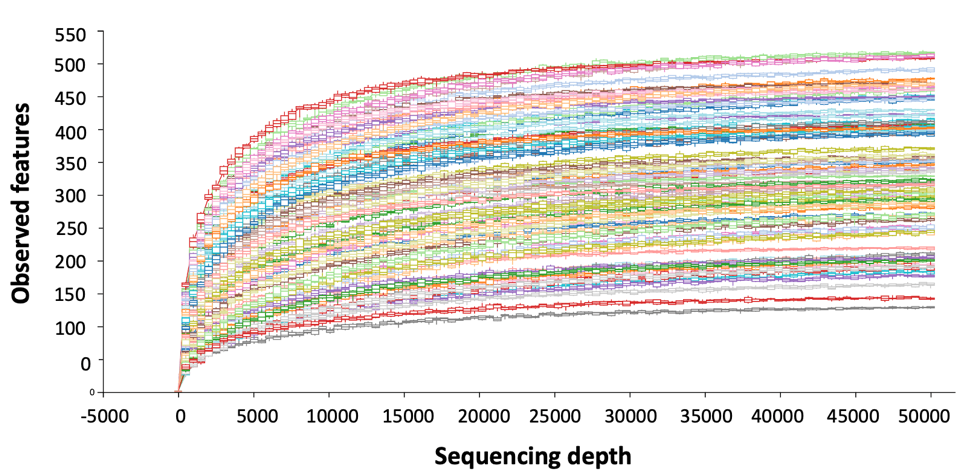
Rarefaction Curve for sequencing depth
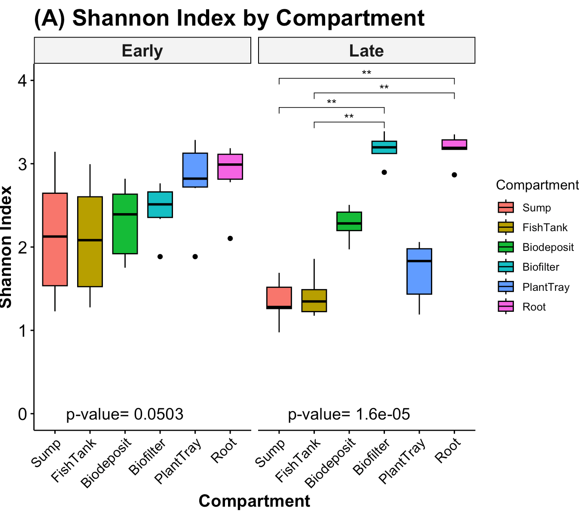
Shannon Index
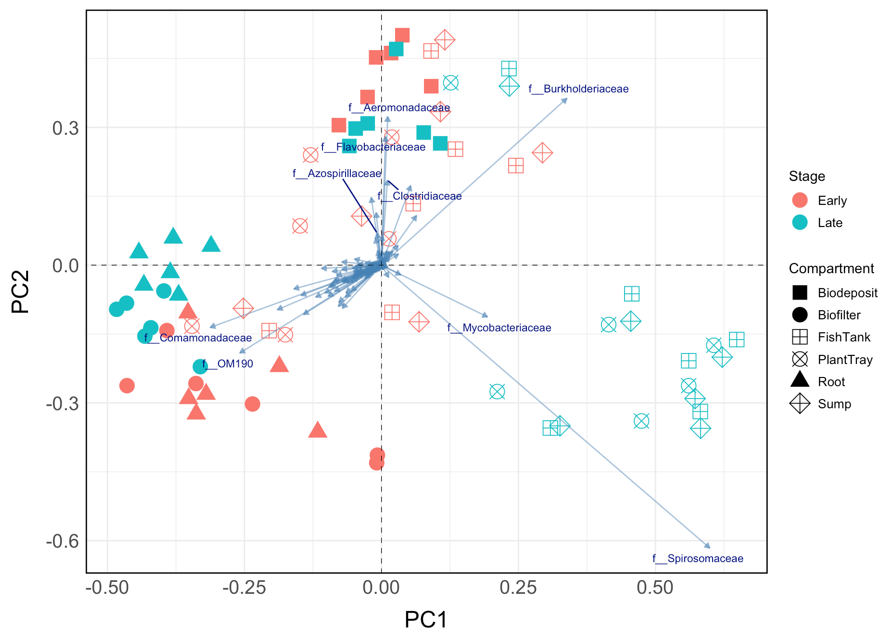
PCA plot